Sunday, June 26, 2011

Early June

Ah, I have been a little lax on my blogging lately.  These pictures were documented earlier in the month.  
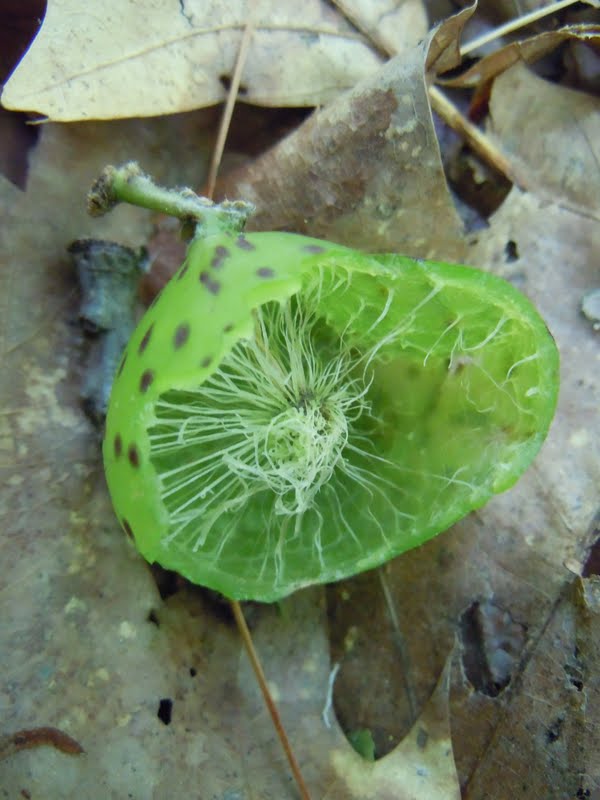
An Oak Apple Gall split open to reveal where the wasp pupa are growing

This little caterpillar seems luminescent
 
Blackberry blossoms 
Blackberry leaves are full of tannins and vitamin C.   Tea made of the leaves is quite good for menstrual pain and trouble as well as colds, and as a gently physic
 
Blue Flag Irises are beautiful but very poisonous.  Medicinally, however, they do have value.   Poultices from the roots are used for bruises and swelling.  The roots are a strong cathartic.  Blue Flag root increases bile production and so is an effective detoxification aid and assists liver function.  Historically it has been used as a weight loss drug.  It has chemical components (triterpenoids) which are also found in Ginseng.  I have always loved this plant for it's external beauty and the more I learn about it the more I like it.  

Green Grapes - along with being a good food source for fruit, raisins, wine and juice, wild grapes can be used as a hair tonic and for kidney troubles.

This turtle was in the process of laying eggs...

Turtle Eggs would be a welcome source of food if you were hungry (some critter ate them a few days later in fact)

Tuesday, June 14, 2011

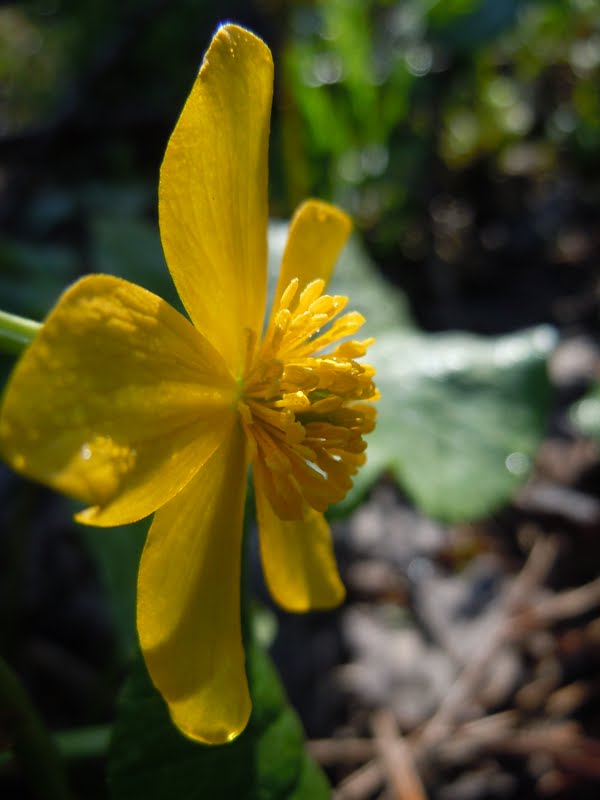
Marsh Marigolds

Rewind.... to early/mid May!   I was hoping to cook up a big pot full of Marsh Marigold (also known as Cowslip) greens but life and hunting got in the way and I did not find the time.   I suppose I could still cook up a heap but I hear that the greens turn bitter and tough after the blossoms fall off.  

Marsh Marigolds grow in mass at the old farm.   They are a beautiful sight in the spring and are some of the first green things to abound.  

The blossoms can also be made into wine

The unopened buds can be boiled, pickled and eaten like capers.

Marsh Marigolds are said to have some medicinal properties as well.   They contain a poison which must be boiled out before eating, but medicinally it can be used as a diuretic, to loosen mucus in the sinuses and as an expectorant, to treat warts and of course the list goes on but these are the most commonly noted uses.

Wednesday, May 25, 2011

Eating Invasives


Three different Blue Lupine shades


This pretty plant is commonly called Garlic Mustard.  It was introduced to North America sometime during the 19th century and is wildly invading the native forests.  Fortunately it is extremely easy to identify thanks to it's tall stalks, distinct leaf shape and small four petaled white flowers.  If you ever see this plant, do your local habitat a favor and pull it out!  

On the plus side, it is not called Garlic Mustard for no reason.   It has a strong garlic scent and a good strong bitter green and garlic flavor.  The second nasty invasive that I have eaten which is very very edible.   Maybe eating these unwanted plants would be a good way to control their propogation (I have heard that they make good pesto - a spread to fight spread?)

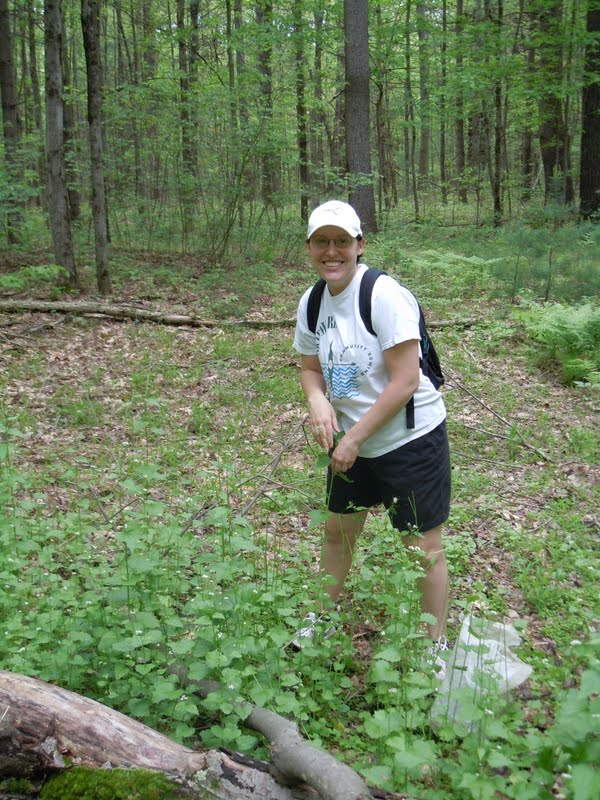
My friend Angela came out with me this morning.  It was nice to have someone along - my own perspective is too narrow and limited and I love hearing the thoughts of another person out in the woods.   Not only does Angela have great ideas about life but she sees the natural world in a way I do not which challenges me and fleshes out my own understanding of things.    Oh yeah, and she encouraged me to actually pick and eat Garlic Mustard.  This is a picture of her picking some - although it was hard to get a picture of her between mosquito swattings - they are really terrible right now. 

Sauteed Garlic Mustard and Arugula.  Spicy and very delicious.  After I ate a few bites plain I finished it off in a tomato cream sauce over pasta and it was fantastic.  Greens for the cost of a peaceful morning, healthy exercise, saving native species, good conversation and a few mosquito bites, I say "score"

Sunday, May 22, 2011

Ramps and Morels

Ramp season is by far my favorite time of the year.   Ramps and Morels should be hunted at the same time.   

I am part of a living history group and what I love most about the reenacting community is the diversity of people.  Anyone who is involved in my group particularly is riddled with talents and rich in knowledge; creative and resourceful in ways you can not even imagine.  Not to mention good sports and willing to eat the crazy things I am always bringing around.  

Freshly picked and rinsed ramps.  Ramps are virtually impossible to confuse for a poisonous plant - they smell overwhelmingly of onions.  I really really really love ramps.  A lot.  

Ramps growing on a hillside.   Ramps are protected in New York State, so please only pick them where they are plentiful.   The place where I harvest them has acres covered in them and I take only a few of the population.  

A flower spike

Wild Ginger flowers sit at the base of the plant, on the ground, and attract crawling insects such as ants to pollinate them.  

I only have one Morel hunting spot as of yet, but I will keep looking and hopefully in the next few years I can add to my locations.  

In a half an hour I was able to pick a good number of Morels 

I brought a large armload of ramps to a living history event and traded 1/3 of them for the hindquarters of a beaver.  I butchered it up as well as I could in the dark and sauteed it with butter and onions.   

The beaver meat was delicious - it reminds you of beef and is extremely tender and a bit greasy but not in a bad way at all.  I'm not sure why some people are afraid to eat anything but cows, pigs and chickens.   

Breakfast - bacon, acorn and cornmeal cakes, and Morels waiting to be cooked

Morels and Ramps


Raccoon Brains cooked with onions
really - the Morels were delicious but unfortunately they had a bit of sand in them.   I will have to figure out a way to de-grit them if I can.   Also, next time I will be frying the Morels separately from the Ramps, there was just too much moisture in the pan and they did not caramelize as much as I would have liked.

Friday, May 20, 2011

Edie Road in May

So, I have another food blog coming up - Ramps, Morels and Beaver meat.  I am waiting on some pictures, however, and will have to be satisfied with this blog for the time being.  These pictures are all from the Edie Road portion of the Wilton Wildlife Preserve.  It was raining on and off and the mosquitoes were horrendous.       I am going out again as soon as I finish this post... 

Starflowers are blooming in force right now.   The Ojibwe people used the root of this plant in a smoking mixture burned to attract deer

Fringed Polygala - besides being very pretty this plant can be used to increase milk production, as a stimulant, to induce sweating or as a general tonic.   It is in the Milkwort family of which some members are highly regarded as important medicinal plants.  

Wood Anemone

Taking pictures was brutal today - if I stopped for even 10 seconds I was covered in mosquitoes.

High-bush Blueberries.  I have never seen so many low and high bush blueberries growing in one place before.    There must be 20 acres of thick growth berries.    I am pretty sure I will be spending several days here when the berries are ripe next month.


Edible Cinnamon Fern - if you are willing to rub off the fuzzy exterior which is not fun at all

Sarsaparilla - this Ginseng relative has been widely used for centuries to treat all sorts of ailments but most commonly for ulcerous sores and other skin conditions as well as to staunch bleeding.   More recent studies have pointed towards it's being an effective treatment for cancer.  Sarsaparilla has been used by many cultures for many years to make beverages; beer, wine, tonics, and of course root beer.  The roots can also be eaten.

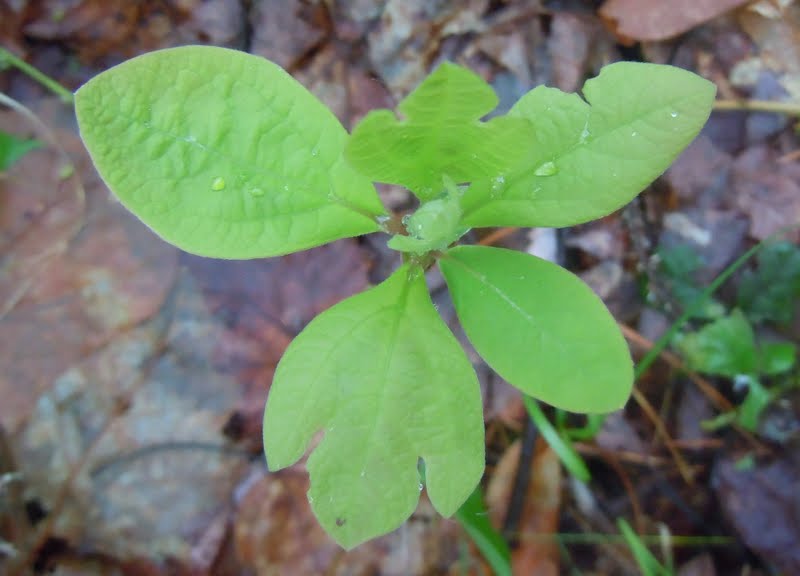
Sassafras seedling


Bastard Toadflax

Blue Lupine leaves

Blue Lupine.  This sandy meadow has been preserved as habitat for an endangered butterfly species (Karner Blue).   The Lupine which grows there is said butterfly's primary food source.   Lupine can also be eaten by humans - the roots roasted and ground into flour.  Be careful, if you eat the raw roots you may be in for a toxin-induced stupor.  Actually, Lupine has been used as a calming sleep aid.   The seeds can be eaten , though they sometimes need to be leached. 

Fuzzy Oak leaves

Pussy-willows 

A nice bunch of Partridge Berries

Sunday, May 8, 2011

Some of the books I use to gather information.  I also have a few internet sources which I use on occasion - but the internet is mostly useful for positive identification of plants.   Most field guides and books do not offer adequate descriptions or photographs.   Oh, I am missing my Peterson's Wild Edibles field guide.   I cannot find it and I am afraid I will have to buy another since it's a really great book.
Also on my wish list:

This looks like a great read and good resource.  


If only I could get a copy of Jane Colden's original/complete manuscript - this copy only contains a portion of her work.  I am pretty sure that the London Museum has a copy of the original.  She was from New York State and her drawings are beautiful.


This last one is by Steve Brill, a sometimes urban forager who lives in downstate NY.   He is a pretty cool guy and this book is loaded with plants - one of the best collections I have seen.  He also does a great job of telling you how to prepare them.  

Of course there a a hundred other books I want to read as well.

The Mayapples in May

I forgot to post up this picture of my Sensitive Ferns prior to cooking.   

Goldthread flower.   This plant is also called Mouth Root and Savoyane, which is derived from a Micmac word meaning "dye for skins".   

Goldthread leaves.  The leaves, roots and stems make a yellow dye which can be used for dying quills, leather, wool and I would imagine many other things as well.  

The bright yellow roots (of course they are even brighter in person) of Goldthread.  This plant derives it's name of Mouth Root from it's long standing reputation for healing mouth thrush and canker sores.   If you have a sore mouth, grab some of these roots and start chewing.    The plant has also been used to treat deafness and eye infections.  It was traded heavily at one time by European colonists in North America.  

Indian Cucumber.   This is a delightful vegetable to munch on while you are out in the woods.  It yields a crisp white root with a delightful texture and a sweet cucumber taste.   The root becomes sweeter towards the fall and is sometimes so sugary it tastes like candy.   

As always, be cautious when you are using either Goldthread or Indian Cucumber - they are both threatened species.  Unfortunately a lot of our native plants are threatened due to invasive species, pollution and urbanization.   It is important to respect and preserve these plants.

Painted Trillium