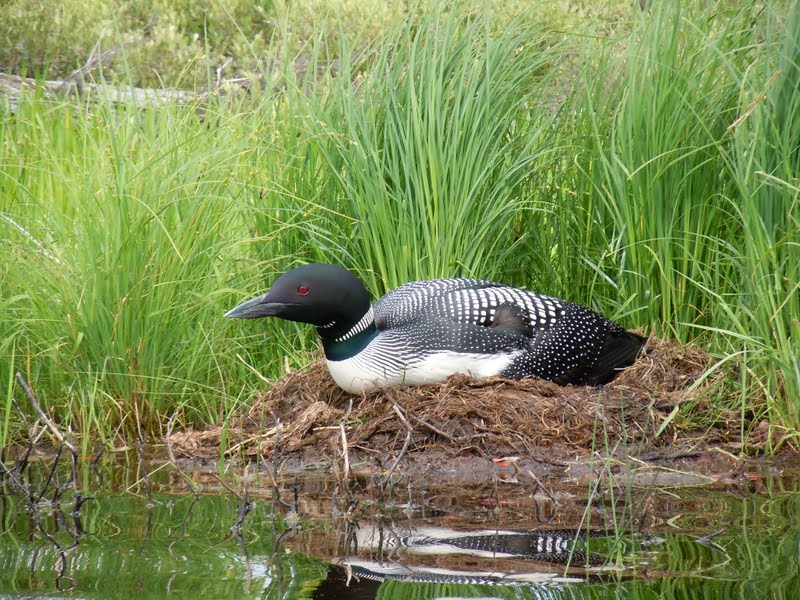
Summer is upon us with strawberries and sunshine (and also lots of rain). My husband and I took a vacation in the Cranberry Lake wilderness region in the middle of June. We canoed for who knows how many miles from Hitchins Pond to Inlet via Lows Lake and the Oswegatchie river. We saw everything from Bald Eagles to Bears and even had a four day stretch were we did not see or hear any other human beings. It was great.
I think that we are constantly receiving sensory input of various artificial sorts which have an impact on our beings in a holistic sense. We are advertised to relentlessly - while driving, listening to music, watching tv, going to school, acquiring food, walking down the street and so on. We are also constantly hearing the hum of the refrigerator, the traffic on the highway, the airplanes and fans and air conditioners and buzzing of cell phones. Someone told me once (I have no idea how this was discovered or if it's true) that spending one day in NYC provides you with as much sensory input as you might receive in a lifetime if you were a simple farmer only a few hundred years ago. That is crazy. At any rate, spending a length of time away from "civilization" as we call it seems to re-set my brain and it is very very good. It gives me the lovely peaceful ability to slowly process every bird that flits by and every damselfly and flower and I even feel at peace with the mosquitoes and deerflies (I still slap them if they try to bite me but I don't really mind them making the attempt in fact I rather respect them for it).

But, enough crazy talk about getting friendly with biting flies...
My wonderful neighbor Angela checked up on things at our apartment while we were gone and I thought it fitting to thank her with this small but delicious pile of wild strawberries.
They may be tiny but they pack a punch of sweet tart juicy goodness and they are pretty to look at besides.
Our first day of the trip took us through one of my favorite places near the Lows lower dam. One reason I love this spot is because I have spent some unforgettable time there with wonderful friends. Another is the Pickerel Weed.
Pickerel Weed is a very versatile edible plant. These unfurled leaves can be used as salad greens or boiled for a few minutes and eaten as a delicious and nutritious pot herb. Later in the year I will collect seeds from the flowerheads which can be roasted, eaten raw or made into seed butter and oil.
Don't think we ate this well for the whole trip - only the first night allowed for steaks, potatoes and Pickerel Weed with butter. Pickerel Weed has a very mild flavor and was a lovely addition of greens to our dinner. The unfurled leaves (picked while still underwater) were extremely tender.
Orange Hawkweed shares some pollen with this tiger swallowtail
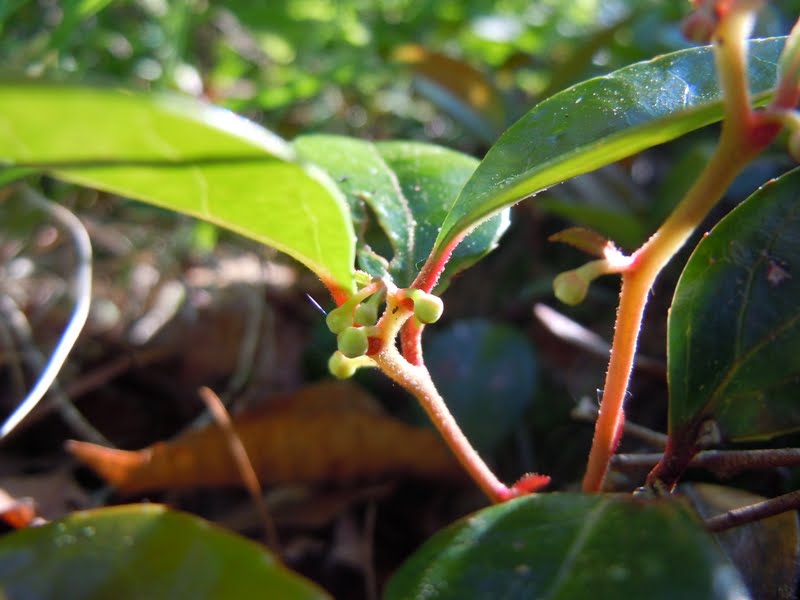
Wintergreen leaves are best for chewing when they are newly emerged. They also make an impressive ground cover in several shades of green and orange.
Northern Pitcher Plants are fascinating, insectivorous plants which trap flies in their "pitchers" and feed on the decaying flies. The "pitchers" can be used as drinking cups. Their reputation as a "love medicine" is not surprising considering the suggestive shape which they employ.
Pitcher Plant leaves, dried and made into tea can be used to combat fever and whooping cough. When the Europeans spread smallpox among the American Indians, Pitcher Plant root and leaves were used to treat it, but without enough success to obliterate or manage the disease.
The nodding flowers are dramatic and brilliantly colored.
This Roundleaf Sundew is another insectivorous plant frequently found in boggy areas. The sticky tentacles trap small insects which the plant digests, absorbing the nutrients. Sundew is used to wash-out freckles and get rid of warts. It contains a chemical which acts as an expectorant therefore being useful for whooping cough, bronchitis, and the like.
Of course, it is also a very nice plant to look at
Sundew and Pitcher Plants are often found on floating bogs like this one which drifts around in the Bog River Flow of Low's Lake. It takes many years for a bog to develop - they consist of layers of Peat, root systems and debris all bound together. Sometimes they become so dense that they hold trees and you can walk on them. This one would not hold your weight and you would find yourself sinking dangerously if you tried to walk out onto it.
This flower is starting to produce a cluster of bright red Bunchberries which, though tasteless, are very nutritious and usually abundant in the Adirondacks
This pretty little flower belongs to Wood Sorrel, a delightfully sour salad green which also grows quite abundantly in the Adirondacks.
Wild raisins, Witch Hobble, Hobblebush, and Wayfarer's Bush are a few of the names commonly given to this plant which has aloe like properties. This may be due to the fact that Hobblebush secretes nectar through it's leaves rather than it's flowers. In September the berries will turn wine-red and are a fine wild food though they can be scarce since they are also popular with the wildlife. Medicinally it is used for shortness of breath or Asthma, and the crushed leaves have been used to treat migraines.
Some fun pictures of Low's Lake
The Shoreline of Low's Lake
Black Cherries ready to start ripening
Much to my delight I found these beautiful Beaked Hazelnuts right outside of our campsite. I was proud of myself, as I first recognized the leaves and sure enough, after looking underneath I found hazelnuts!
In the fall these little nuts will be ready to devour - unless the bears get to them first
The Sunrise on Low's Lake was absolutely beautiful
At Big Deer Pond we found a doe and fawn chilling out on an island. The doe carefully moved the baby to the middle of the island where they lay down and were pretty well hidden...
...though they couldn't help watching us. Deer can be very curious creatures.
(you can click on the photos for a better view)
And that covers less than half of our trip to the Oswegatchie. Wow, I have a lot of blogging to do!